If you’re passionate about art, design, video, or animation, it can be difficult to choose a single college major. Animation, graphic design, and motion design are some of Villa Maria College’s most popular and renowned programs. There’s quite a bit of overlap among all three of these majors, as all involve creativity, digital tools, and visual storytelling. There’s even significant crossover between the skills students learn and the career opportunities available after graduation.
At the same time, animation, graphic design, and motion design are distinct skillsets. Understanding these differences can help you choose a major that best matches the type of work you most enjoy creating and the direction you’d like your career to take after earning your degree.
What Makes Animation, Graphic Design, and Motion Design Similar?
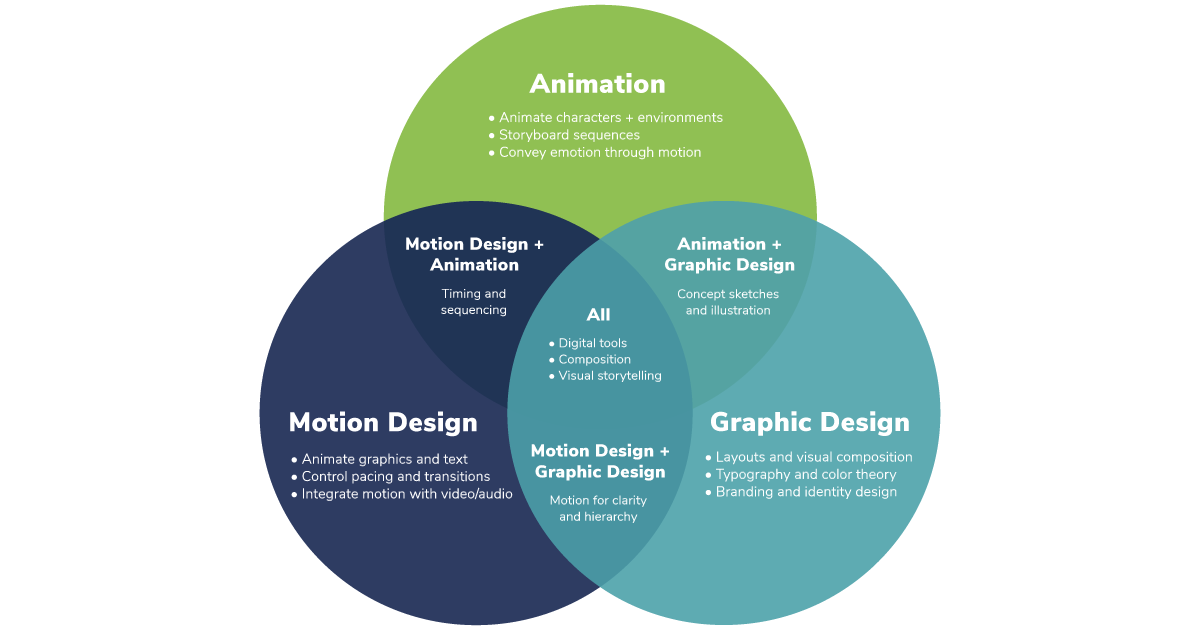
Although animation, graphic design, and motion design each have their own focus, they share many foundational elements.
All three majors teach students how to create visual work with digital tools and apply design principles such as composition, color, and typography. Each also requires creators to conceptualize original ideas, plot them out through sketches or storyboards, and refine their work after feedback. Because students in these majors share so many skills, many find opportunities working in the same fields after graduation: digital media, marketing and advertising, content creation, film and TV, and entertainment.
At the same time, each major has a distinct focus.
What Animation Focuses On
Animation is the art of bringing stories, characters, and worlds to life through movement. Beyond learning basic drawing skills and using software, students gain the ability to convey emotion, personality, and narrative in animated frames. Projects often involve designing characters, storyboarding, creating concept art, and animating shorts.
This major is both highly creative and technical. Animators must understand timing, motion, and visual storytelling while mastering industry-standard animation tools and production workflows. After graduation, students are prepared to work in careers centered around film, television, gaming, and other industries where storytelling through motion is essential.
What Graphic Design Focuses On
Graphic design is all about shaping how people see and understand information. It’s more than making things look good. Graphic designers solve problems by creating layouts, logos, and other content that clearly communicate a message. Students learn how to conceptualize and design branding, print materials, websites, and social media graphics through creativity and strategic thinking.
In this program, learners apply and refine core elements like composition, typography, color, hierarchy, and balance while experimenting with different formats and media. Graphic designers must become proficient with professional design tools to transform concepts into polished, practical solutions. Many go on to work in marketing, advertising, publishing, digital media, and other related fields.
What Motion Design Focuses On
Motion design centers on using movement to enhance communication visually with motion, video, and graphics software. Instead of working primarily with static layouts or long-form narratives, motion designers create short, engaging visual sequences that explain ideas, highlight key messages, and elevate digital content. Their work commonly appears in branded videos, social media ads or posts, website animations, commercials, or on-screen graphics for film and TV.
Students in this program combine design, animation, video, and sound components to produce content that is intentional, visually appealing, and impactful. Courses teach students how to pace content, create a visual flow, and keep audiences engaged. After earning their degree, graduates are ready to take on careers in industries like digital marketing, content creation, video production, and broadcast media.
Take the Next Step at Villa
At Villa Maria College, each creative major gives you a focused path while building shared foundational skills. Even after declaring a major, you can take elective courses or add minors in related areas to broaden your abilities and strengthen your portfolio. To learn more about these programs and discover which path fits your creative goals, reach out to our admissions team today!